Culture & history
Why Singapore's Hawker Culture Is on UNESCO's Heritage List
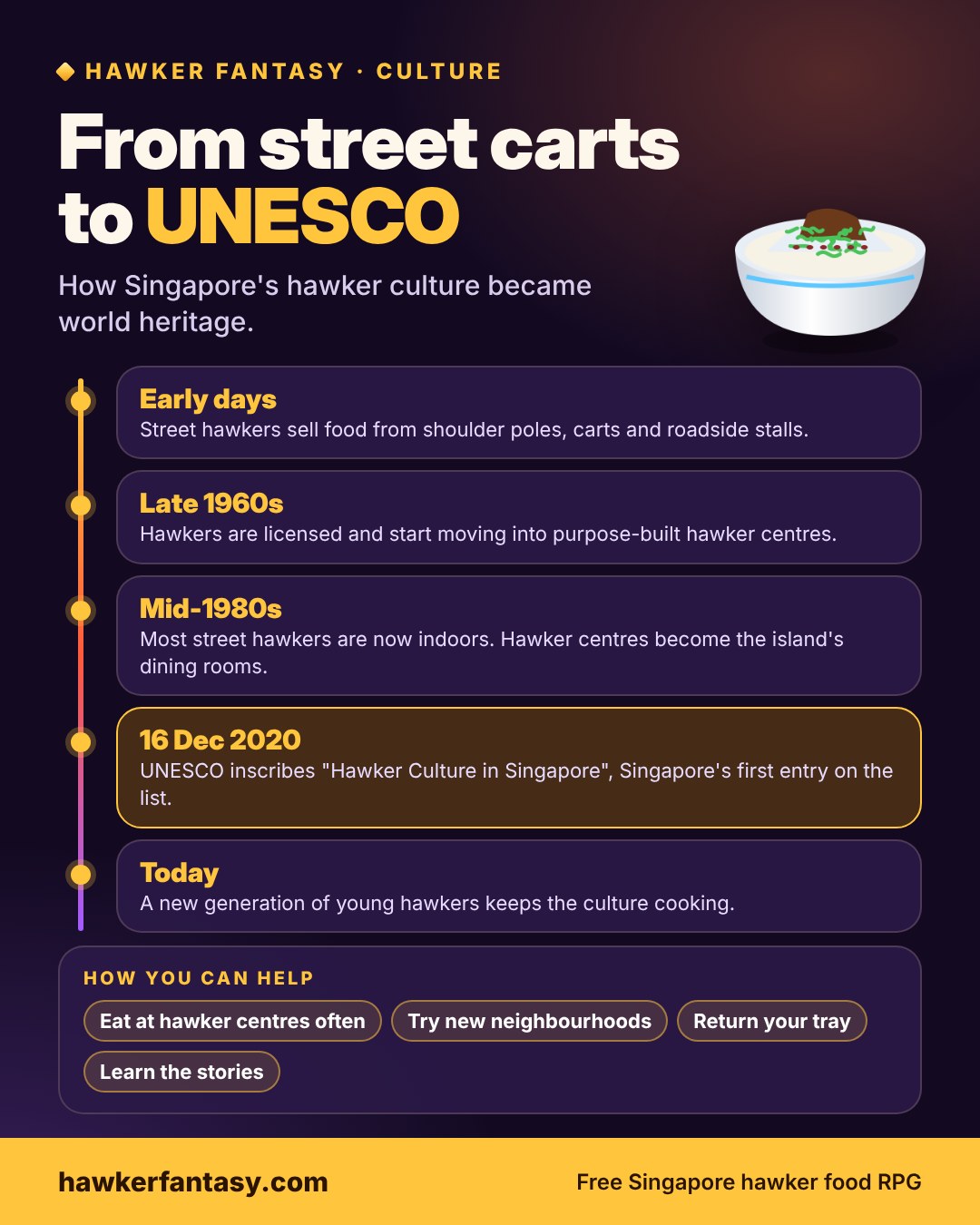
On 16 December 2020, UNESCO added "Hawker Culture in Singapore" to its Representative List of the Intangible Cultural Heritage of Humanity. It was Singapore's first entry on the list. UNESCO wasn't recognising a single dish or building, but a way of life: community dining and cooking in a multicultural city.
From street carts to hawker centres
Singapore's hawkers began as street food sellers. They carried food on shoulder poles, pushed carts or set up stalls by the roadside, selling noodles, satay, rice and kueh to workers and families. Over the decades, many dishes were adapted from Chinese, Malay, Indian and Peranakan traditions into something new and distinctly local.
Street hawking was hard work and difficult to keep clean, so from the late 1960s the government began licensing hawkers and moving them into purpose-built hawker centres, with running water, proper drainage and shared seating. By the mid-1980s, most street hawkers had moved indoors. Those centres became the island's shared dining rooms.
Why it matters
A hawker centre is one of the few places where everyone eats side by side: office workers, construction workers, students, grandparents and tourists, at the same tables, often for under ten dollars. Many hawkers have cooked the same dish for decades, passing recipes and techniques to their children or apprentices.
That is why the recognition matters. It isn't only about the food. It's about the people who cook it and the habit of eating together.
The challenge
Many hawkers are now in their 60s and 70s. The work is long and physical, and not every family has someone to take over. Some well-loved stalls have already closed for good. Today there are programmes to train new hawkers, and a new generation is opening stalls with fresh ideas. Neighbourhoods like Punggol are known for young hawkers trying something different.
How you can help keep it alive
- Eat at hawker centres often, and try stalls beyond the famous ones.
- Visit different neighbourhoods. There are 126 hawker centres across the island.
- Return your tray and keep tables clean for the next diner.
- Learn the stories behind the food. Every dish in our food guide has one.
That is also why we made Hawker Fantasy, a free game where you collect food gems from real hawker centres, learn each dish's history, and stamp your Makan Passport when you visit in real life.
Hawker Fantasy is made in Singapore by a small team from the F&B industry who spend a lot of time in hawker centres. We never rank individual stalls. Every centre has its own favourites.